
When people think about modern technology, they often imagine flashy startups, apps, or Silicon Valley success stories. What gets overlooked far too often is the deep scientific work that made everyday technology possible in the first place.
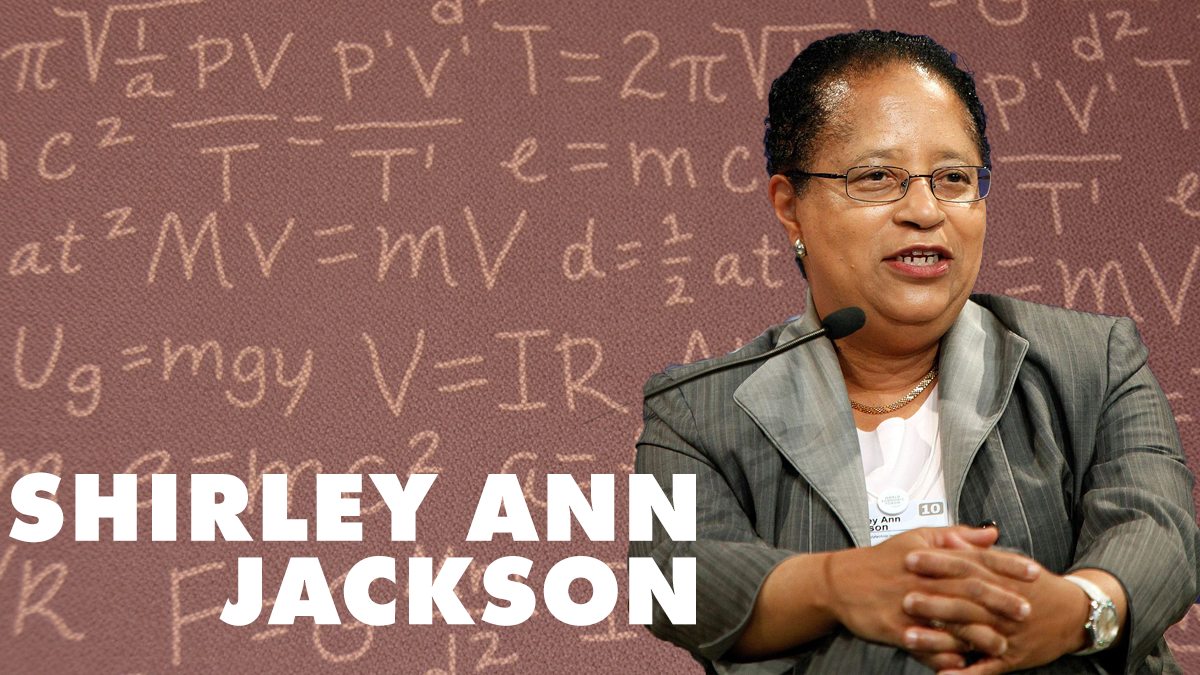
Dr. Shirley Ann Jackson is one of those people whose work quietly shaped the world we live in, even if most people do not recognize her name.
She is a theoretical physicist whose research directly influenced telecommunications technology. That includes advances that helped lead to touch tone telephones, fiber optic communications, caller ID, and portable fax machines. These are things many of us grew up using without ever questioning where they came from or who made them possible.
Dr. Jackson earned her PhD in physics from MIT in 1973, becoming the first African American woman to do so. That alone is significant, but it is only the starting point of her story. She went on to work at Bell Laboratories, one of the most important research centers of the twentieth century. Bell Labs is responsible for inventions like the transistor and the laser, and Dr. Jackson was doing high level theoretical work in that environment when very few women, and even fewer Black women, were present.
Her research focused on the physics of materials and signals, work that laid the foundation for how information moves across networks. When we talk about the internet, smartphones, and modern communication systems, we are really talking about layers built on top of this kind of research.
Later in her career, Dr. Jackson also became a leader in science policy and education. She served as chair of the U.S. Nuclear Regulatory Commission and eventually became president of Rensselaer Polytechnic Institute. In that role, she pushed hard for innovation, diversity in STEM, and the idea that science and engineering should directly serve society.
What stands out to me is that her impact exists on two levels. On one level, she helped shape the physical technology that connects us. On another level, she helped shape institutions and pathways so that more people could participate in science and engineering in the future.
This is why Black history in technology matters. It is not just about representation or checking a box. It is about understanding that the systems we rely on today were built by people whose contributions have often been minimized or ignored. When those stories are erased, we lose a more accurate picture of how progress actually happens.
Dr. Shirley Ann Jackson’s work is part of the backbone of modern communication. Every phone call, every text, every data packet moving across fiber owes something to research like hers. Remembering that matters.
And as someone who spends a lot of time thinking about technology, its purpose, and who it serves, I think it is worth saying this out loud. The future of technology has always depended on a wide range of minds. It always will.
Leave a Reply