
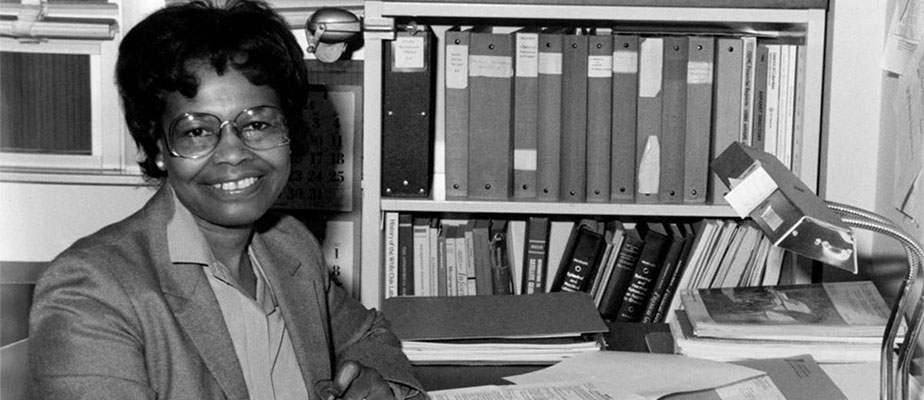
When we talk about technology in America, we often focus on the finished product and not the people behind it. GPS is one of those technologies that most of us use every day without a second thought. It tells us where we are, how to get where we are going, and in many cases keeps us safe. What often gets left out of that story is the fact that one of the key minds behind GPS was an African American woman named Gladys West.
Gladys West was born in 1930 in rural Virginia. She grew up working on a farm, and like many Black Americans of that era, her opportunities were limited by segregation and systemic barriers. Education became her path forward. She excelled in mathematics and earned a scholarship to Virginia State College, where she later earned degrees in mathematics and eventually a PhD.
In the 1950s, Gladys West began working at the Naval Surface Warfare Center in Dahlgren, Virginia. This alone was remarkable. She was one of only a few women, and even fewer African Americans, working in a highly technical and classified environment. Her work focused on satellite geodesy, which is the science of measuring and understanding the shape of the Earth.
This matters more than it sounds.
For GPS to work, you have to know the exact shape of the Earth and how satellites move around it. Even small errors can result in massive inaccuracies on the ground. Gladys West developed complex mathematical models and computer programs that helped account for those variations. Her work helped create the precise Earth models that GPS relies on today.
This was not flashy work. It was long, detailed, and often invisible. It involved early computers, punch cards, and equations that took years to refine. There was no app, no press release, and no recognition at the time. But without that foundation, GPS as we know it simply would not function.
What stands out to me is how often this happens in the history of technology. The people who do the foundational work rarely get the credit. In Gladys West’s case, it took decades before her contributions were widely recognized. She was inducted into the Air Force Space and Missile Pioneers Hall of Fame in 2018, long after GPS had become a household tool.
Her story challenges a lot of assumptions. It challenges the idea that innovation only comes from Silicon Valley. It challenges the idea that technology is built by lone geniuses. And it challenges the narrative that African Americans were only passive participants in America’s technological growth.
Technology is supposed to make life easier, safer, and more efficient. Gladys West helped do exactly that for millions of people, whether they know her name or not. That is worth remembering, not just during Black History Month, but whenever we talk about innovation and progress in this country.
Leave a Reply